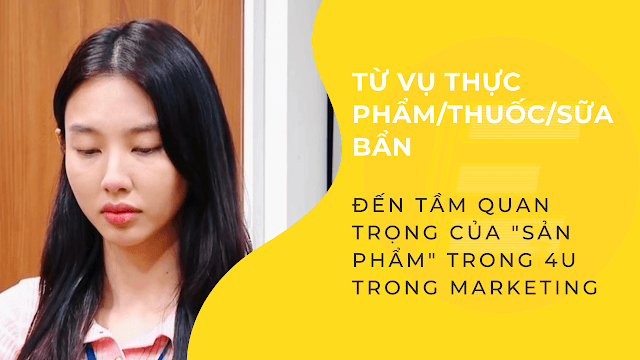
A wave of fake-milk scandals, low-quality functional foods, and the controversial Kera vegetable candy are raising a big question again: is “product” still the center of a marketing strategy? Let’s analyze this with The Fool through the lens of 4U Marketing to understand it better.
When Miss Thùy Tiên was detained over a product scandal
The story of Miss Thùy Tiên being detained over her involvement in promoting Kera vegetable candy — a product found to carry false advertising claims — shook public opinion.
This incident didn’t just damage her personal reputation; it raised a bigger question about the responsibility celebrities carry when standing behind a product. It’s also a wake-up call for businesses and marketers about just how critical “product” is to any communications strategy.
Product: the core, or just a gimmick?
In modern marketing, a product isn’t just something to sell — it’s the foundation of a brand’s credibility and longevity. No matter how advanced the technology or communications strategy, if the product isn’t genuinely good, or is faked, every effort becomes meaningless — and can even backfire.
The “alarm bell” incidents in Vietnam
Recently, a wave of fake-product incidents — from powdered milk to functional foods for infants — has seriously shaken consumer trust.
The large-scale fake powdered-milk case, uncovered with hundreds of products present across the hospital system, along with counterfeit functional foods from well-known businesses, shows just how dangerous it is to put profit above health and ethics.
The Kera vegetable candy incident and the story tied to Miss Thùy Tiên further prove just how big the consequences of false product advertising can be.
A view from 4U Marketing: why is “Product” an indispensable foundation?
In 4U Marketing, each “U” highlights a crucial factor that helps a business run effectively and sustainably. Specifically, when it comes to product, the following principles serve as a compass:
U1 – Understanding Yourself:
A business needs to clearly define its core capabilities, ethical values, and business mission. If you don’t understand who you are and where you stand, producing low-quality or counterfeit products becomes an inevitable outcome. This doesn’t just cost credibility — it undermines the brand for the long term.
U2 – Understanding Customers:
Today’s consumers are smart and can access information very quickly. They won’t accept being deceived by false advertising, especially when it comes to health and safety. So clearly understanding customers’ needs, worries, and rights helps a business build a fitting product…
U3 – Understanding Opponents:
In an increasingly fierce competitive environment, understanding your competitors helps a business choose the right strategy. Trading away ethics to make counterfeit or knock-off goods isn’t a sustainable way to compete. On the contrary, investing in real product quality and genuine differentiation creates a lasting competitive advantage…
U4 – Understanding Targets & Goals:
A business needs to set clear long-term goals, not just short-term sales numbers. If the goal is only quick profit while ignoring product value, the brand can easily collapse once exposed. On the other hand, focusing on quality and customer experience helps build lasting trust…
When celebrities must also be held responsible
The story of Miss Thùy Tiên shows that celebrities aren’t just a brand face — they must also take responsibility for the product they promote. A lack of careful vetting can plunge them into a media crisis and cause serious damage to their reputation.
Media crisis: the serious consequence when a product isn’t “decent” enough
A media crisis doesn’t just happen on its own — it usually stems from a business’s most critical weak point: a product that fails to meet expectations, or is discovered to be fake or low-quality.
When cases like fake milk, fake functional foods, or falsely advertised products like Kera vegetable candy get exposed, the public doesn’t just feel disappointed — they react very strongly. This triggers a chain of negative consequences:
Loss of customer trust: once news of a counterfeit product spreads widely, consumers feel deceived and become highly wary of the entire brand, even the whole industry. This is an enormous loss, since trust is very hard to build but disappears very fast.
Damage to personal and business reputation: in cases like Miss Thùy Tiên’s, personal reputation also takes a heavy hit, potentially leading to lost contracts and a public image that’s permanently “branded.” For the business, the result is a prolonged media crisis…
Increased legal pressure and enforcement from authorities: fake products and false advertising aren’t just marketing mistakes — they’re legal violations, leading to inspections, penalties, and even criminal prosecution. This drains a huge amount of a business’s resources, time, and money.
High cost of crisis recovery: to win back trust, a business has to invest heavily in PR campaigns, product improvements, staff retraining, and sometimes compensating customers. This is no small economic and mental burden.
A media crisis is the most vivid lesson for the 4U principle. If a business understands itself deeply enough not to trade away ethics, understands its customers enough not to exaggerate its advertising, understands its competitors enough not to take shortcuts, and understands its goals enough to aim for sustainability, then crisis can be avoided…
On the other hand, when the product is just a “shell,” every marketing campaign, no matter how sophisticated, becomes a double-edged sword, pushing the business into a corner with no way out.
Decent marketing starts with a decent product
Product isn’t just the production department’s concern — it’s the foundation of every successful marketing campaign. Without a good product, every word becomes meaningless.
The 4U mindset emphasizes that the truth and genuine value inside a product is what ultimately decides trust and lasting success.
THE FOOL — EASY KNOWLEDGE CHANNEL